Share this post
Allies United Breakfast Recap: Moving Together
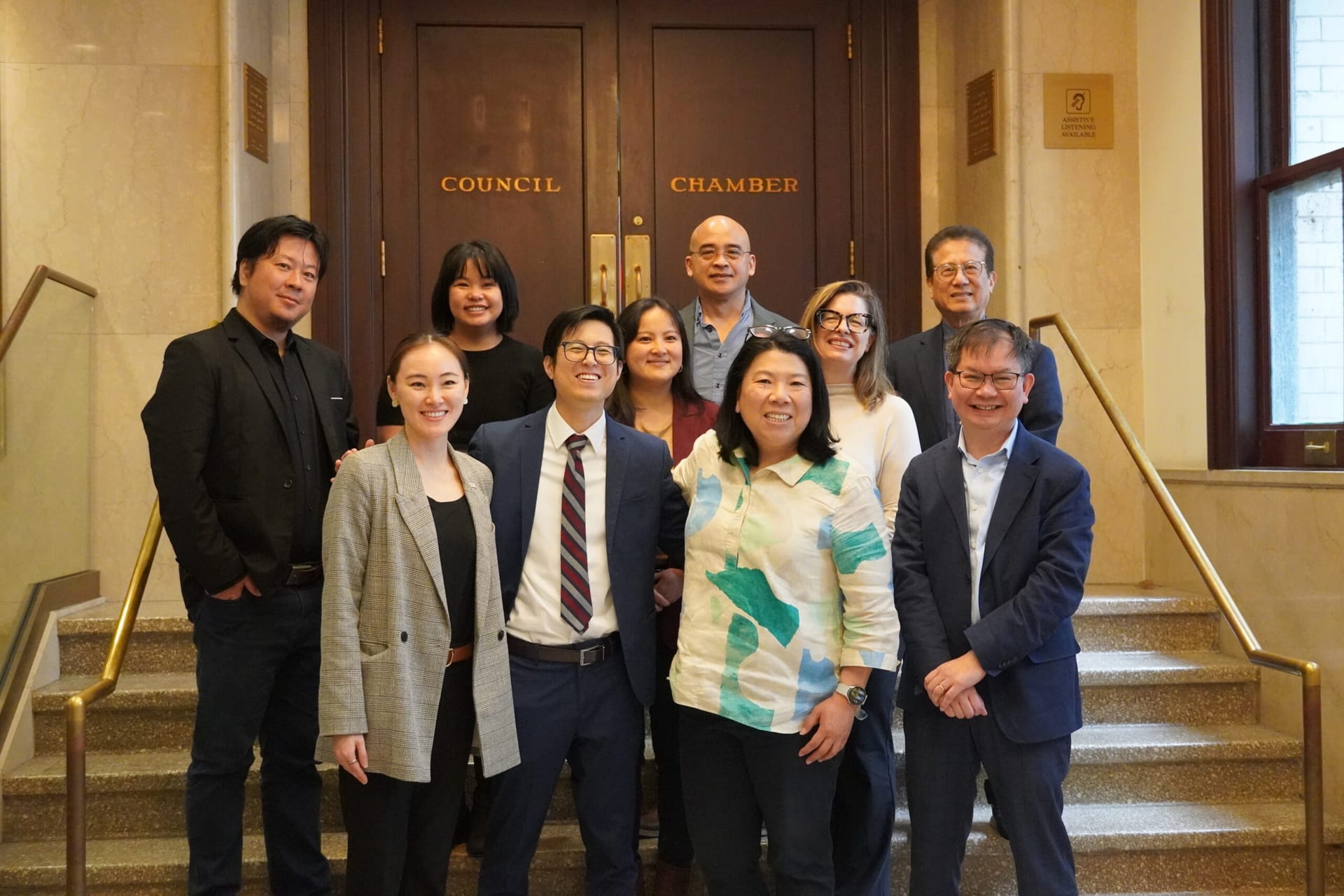
On the morning of April 30th, more than 120 community leaders gathered at the Union League Club Empowerment Center for the third Allies United Breakfast with the focus on translating coalition-building into coordinated action.
Civic Engagement & Advocacy
Educational
On the morning of April 30th, more than 120 community leaders gathered at the Union League Club Empowerment Center for the third Allies United Breakfast — with the focus on translating coalition-building into coordinated action.
When ICE operations intensified across Chicago in fall 2025, organizations that had long worked side by side — but largely separately — found themselves facing the same threat and making the same choice: we are not doing this alone.
The roots of the coalition go back further. Two-Thirds United was founded in 2020 by Black and Latino nonprofit leaders in Chicago who refused to face the aftermath of George Floyd’s murder in isolation, with support from IDHS and the Chicago Community Trust. In 2025, the Illinois Latino Agenda joined, and a broader circle formed — Asian American, Arab American, Muslim, LGBTQ+, disability rights, and immigrant organizations coming together under a shared name: Allies United.

The first breakfast at Casa Central in November 2025 drew 120 leaders. CASL hosted the second in January 2026, where 140 leaders gathered to explore Civic Power, Narrative Power, and Youth Power — and broke into facilitated discussion groups to really listen to what community members were experiencing and what they needed. Those conversations shaped everything that came after, including the April 30th convening.
A Mission Worth Naming Out Loud
Mariana Osoria, CEO of Gads Hill Center, and Annie Reyes, vice president at CASL, opened the morning by grounding the room in why the coalition exists. Allies United is an intersectional, multiracial, multi-faith coalition of Illinois organizations committed to protecting civil rights, building cross-community solidarity, and taking coordinated action to defend the communities its members serve. The purpose is straightforward and powerful: to move together — as Black, Latino, Asian American, Arab American, immigrant, LGBTQ+, disability rights, faith, and allied communities — in defense of shared rights, a shared future, and a shared state.

For 2026, the coalition is focused on building something that lasts: a shared narrative infrastructure, unified messaging, and the capacity to amplify each other’s stories across organizations. The goal is to genuinely show up for each other’s communities, not just their own. This year’s priority issues include birthright citizenship and the 14th Amendment, November election readiness, the Evanston Reparations process, state legislation in Springfield, and community storytelling.
Learning Together: Illinois' Diverse Muslim Communities
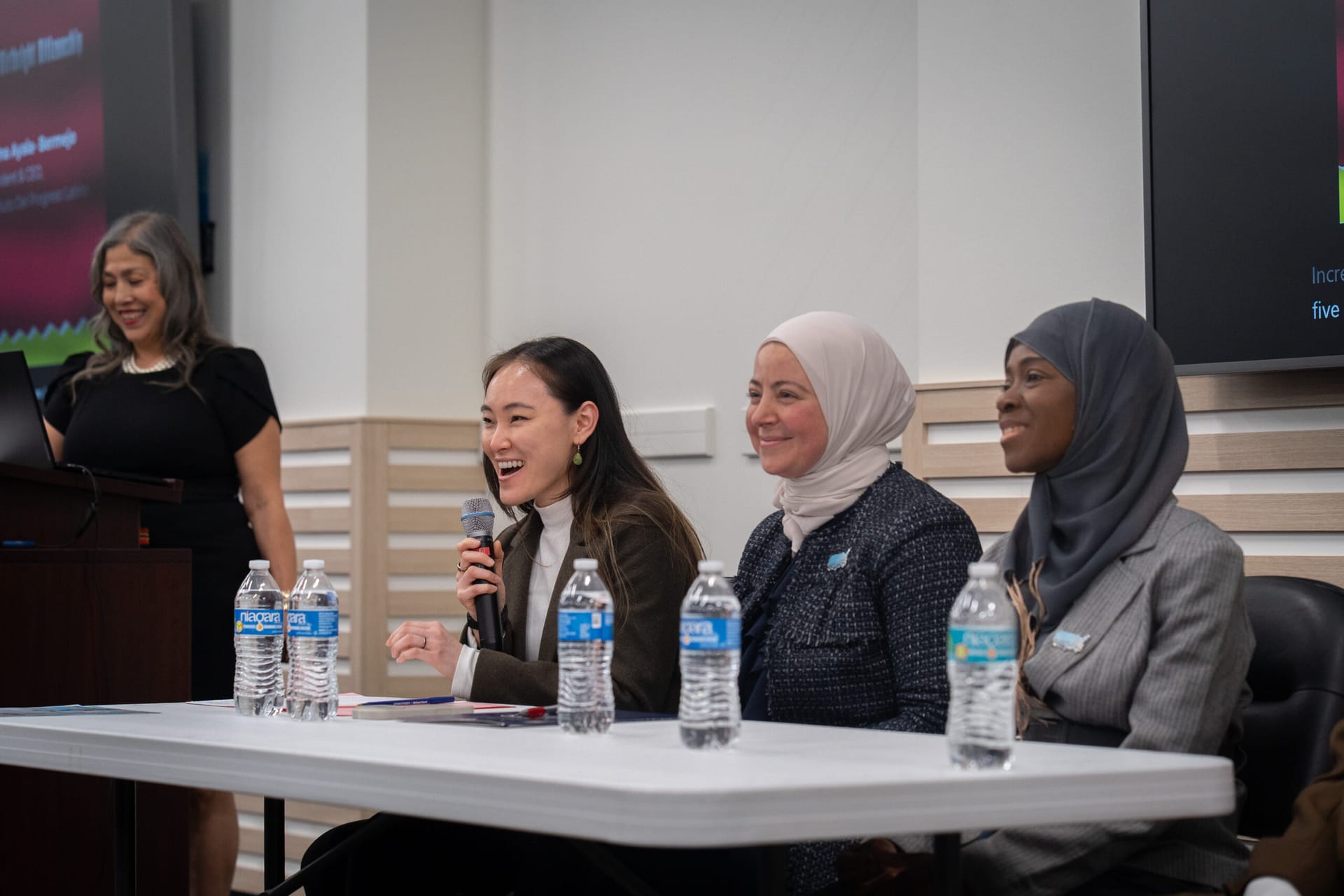
 Some of the most powerful moments of the morning came from simply listening. Dr. Dilara Sayeed, CEO of Penny Appeal USA and board member of the Muslim Civic Coalition, and Ndidi Okakpu, director of Okakpu Consulting and community impact leader, led the room through an honest conversation about Muslim American history, identity, and what it feels like to be a community navigating heightened fear and scrutiny — while also showing up as a full partner in coalition work.

“When civil rights are stripped from one group of us, it will not be long before the next group, and the next group, is impacted,” Okakpu shared, “That is why we must already know each other so that when crisis happens, we are not running in chaos. We are already standing in solidarity.”
One of the most important things the conversation made clear: there is no single Muslim American story. In Illinois alone, the Muslim community spans dozens of ethnicities, languages, and national origins — Arab, South Asian, Black American, African, Southeast Asian, and more. Muslims in this state are doctors and organizers, immigrants and fourth-generation Americans, born in Chicago and born overseas. What they share is faith — and increasingly, a common experience of being treated as a monolith by a political climate that finds it easier to fear than to understand. That flattening does real harm, and part of what Allies United is committed to is pushing back against it by creating space for the full, complicated truth of who these communities are.

The floor opened, and audience members stood up and offered something personal — their own stories. A physician who grew up in Chatham during the civil rights movement spoke about what it meant to come of age Muslim and Black in Chicago at a time of profound national rupture, and how that history echoes today. A policy advocate and daughter of Pakistani immigrants — born in Venezuela, raised between cultures and countries — spoke about navigating a multiracial identity and what it means to belong nowhere neatly and everywhere at once. A community organizer spoke about raising multiracial children, including a child who is part Japanese, and what she thinks about when she imagines the world they’re inheriting. Three women. Three completely different paths into this room. And a collective reminder that Muslim American identity in Illinois is not one story — it is many, and each one matters.
Panel: The 14th Amendment and Birthright Citizenship
Karina Ayala-Bermejo, president & CEO of Instituto Del Progreso Latino, moderated a panel on one of the most urgent legal threats facing these communities: efforts to reinterpret or eliminate birthright citizenship protections under the 14th Amendment. Panelists included Lisa Wright of CASL, Amina Barhumi and Fatima Mohammed of the Muslim Civic Coalition and Marty Castro, president & CEO of Casa Central.

On January 20, 2025, President Trump signed an executive order that would end birthright citizenship — the guarantee of U.S. citizenship to virtually everyone born in this country. Courts have uniformly blocked the Trump administration from implementing the executive order, and a Supreme Court decision is expected by the end of June or early July. The stakes are significant: if Trump’s order is allowed to continue, children born to undocumented parents and documented immigrants would be considered unlawful residents, a move that could increase the undocumented population in the U.S. by nearly 25% over the next 50 years.
 Marty Castro brought the stakes into sharp personal focus. He shared his grandfather’s naturalization certificate — issued in Chicago on December 21, 1948 — a fragile document that represents something enormous: the moment a family became American. He asked the room to consider what happens if that floor disappears. The consequences don’t stop with one person or one generation. A rollback of birthright citizenship would set off a domino effect, casting doubt on the citizenship status of people whose families have been here for decades. It would also create real, practical barriers — making it harder for legal citizens to obtain something as fundamental as a birth certificate.
“In moments of uncertainty, our strength lies in each other,” Castro remarked, “We have faced challenges before, and we have prevailed — not alone, but together. The 14th Amendment has protected generations of Americans, and while we await the Court’s decision, we must not let fear divide us. Our solidarity is our greatest asset, and it will carry us through whatever comes next.”
What's Next
 Three breakfasts in, 120 leaders strong, and with a concrete set of priorities for 2026, Allies United is building something real. It started because these organizations refused to face impossible moments alone. It continues because they’ve seen what’s possible when communities actually show up for each other.
CASL is proud to be part of this coalition — and the work is just getting started.