Share this post
From Teacher to Donor: Kim Phan on Why CASL’s Teens Need More Support
Kim Phan moved to Chicago in 2020, in the middle of the COVID-19 pandemic, holding a master’s degree in Chinese and Asian studies and a desire to work with the Chinese American community.
Volunteering & Support
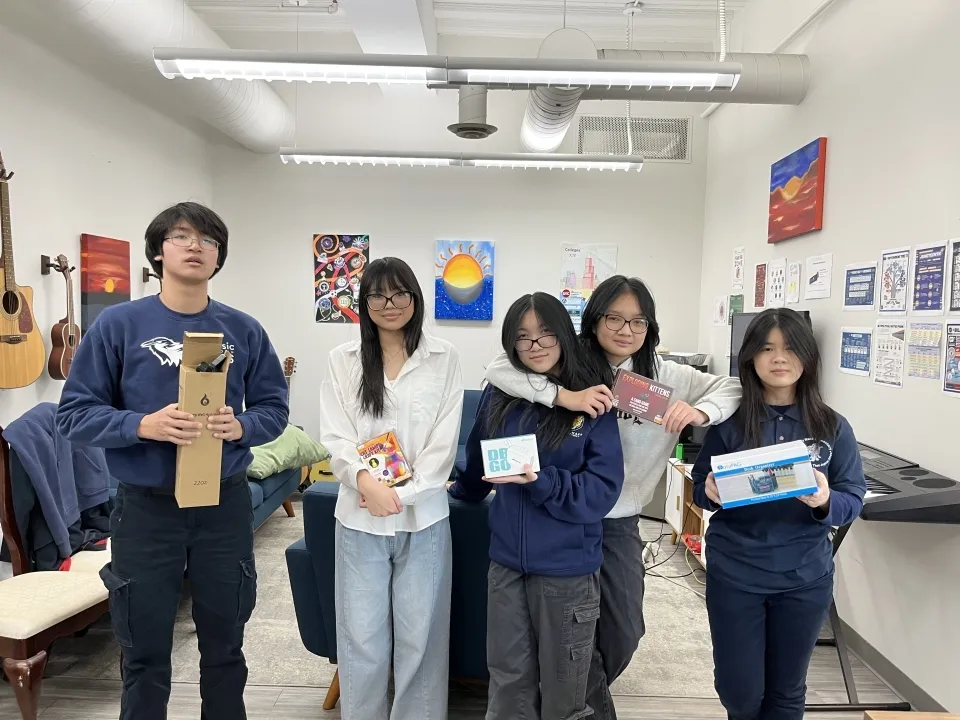
Kim Phan moved to Chicago in 2020, in the middle of the COVID-19 pandemic, holding a master’s degree in Chinese and Asian studies and a desire to work with the Chinese American community. She found the Chinese American Service League and took a job as a middle school teacher in the youth department. Four years later, after moving through roles as a high school teacher and then youth program manager for CASL’s School Age Center, she left CASL — but never stopped supporting it.
Now a donor, Phan says her time on staff showed her a gap in giving that still drives her support today: donations for CASL’s youth skew heavily toward younger children, while teens 12 and older are often overlooked.
“A lot of times the younger kids would get donations during Christmas,” Phan said. “But then all the kids 12 and up typically never got any kind of donors giving them help or gifts.”
She recalled one student, a high school freshman, who was asked what she wanted for Christmas and listed toys for a toddler. When Phan asked who the gifts were for, the student said she knew her younger brother wouldn’t get anything because her mother couldn’t afford it — so she asked for him instead of herself.
“These kids really do have good hearts,” Phan said. “I want to help them have a good Christmas.”
Phan pointed to CASL’s range of programming — from field trips to social-emotional learning sessions to advocacy projects like the Colors of Compassion anti-hate art initiative — as central to why she keeps giving. She said teens at CASL are navigating identity, bullying and, in some cases, racism for the first time, and need adults who will listen rather than direct.
“You just kind of got to let them figure it out for themselves,” she said. “But be there to support and be there to listen.”
Her hopes for current students are practical rather than lofty: not necessarily college, but confidence and readiness for whatever comes next. “I hope that they can be well-rounded and adjusted to society,” she said, “giving them that power to choose for themselves.”
Phan also remembers the lighter moments — including the origin of Stripey, a hamster a teen smuggled into the youth center in her pocket because her mother wouldn’t allow a pet at home. Staff decided to let the group keep it, assigning students to rotate feeding and cleaning duties. The hamster became a fixture of the program and, after his death, a tradition continued with pets in other classrooms.
“I think it was a good learning experience,” Phan said. “Stripey lived in luxury. He had quite the life.”
Asked what keeps her connected to CASL years after leaving, Phan pointed to relationships built with students whose lives she may never fully know the outcome of.
“You never know the impact you’re going to have on their lives,” she said. “I still care, and I still see you, and I still want to help.”