Share this post
Practicing Love: Lessons from Bernie and Albert’s Letters
How Bernie and Albert Wong’s Letters Teach Us to Practice Love
Social & Cultural
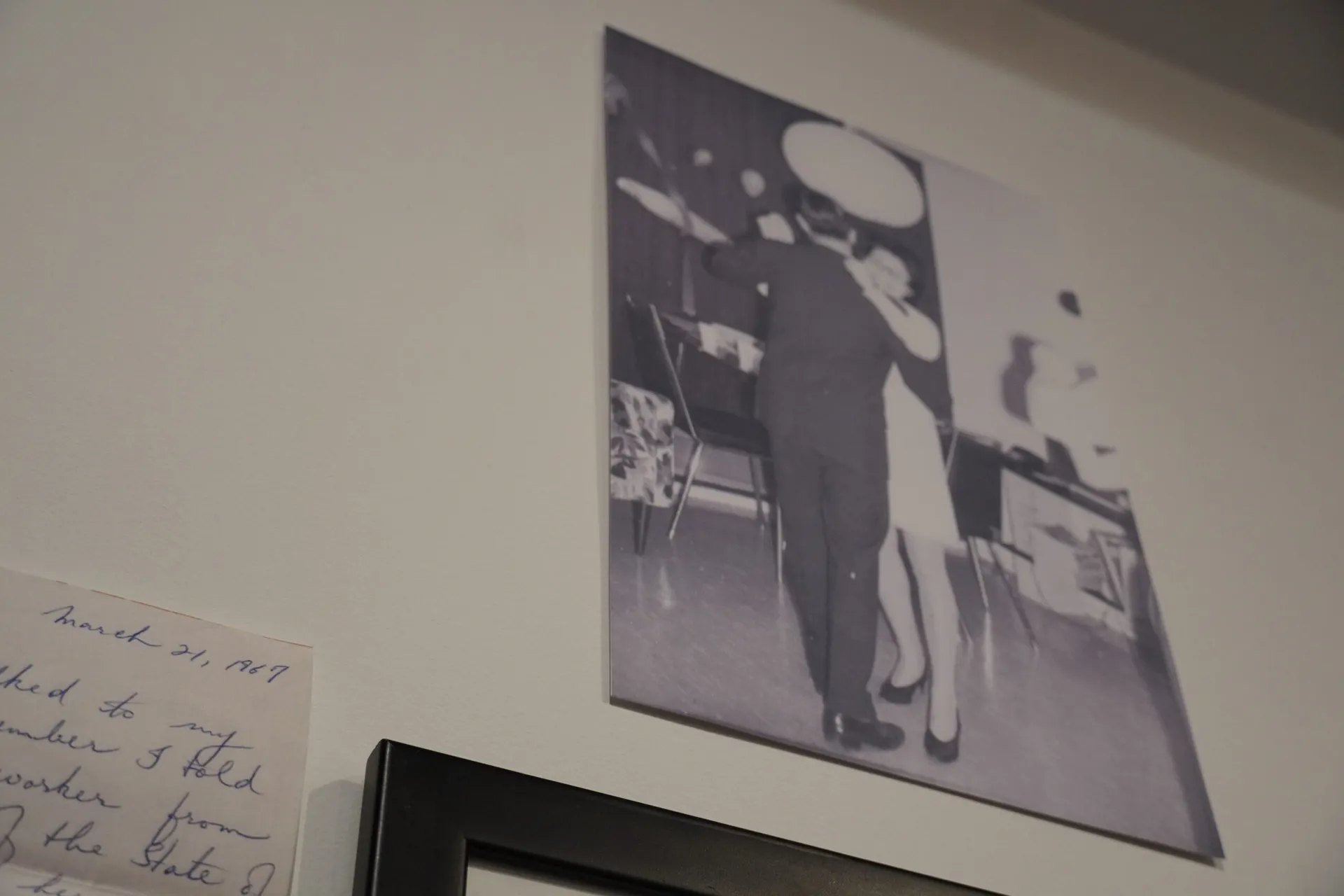
This Valentine’s season, we were honored to celebrate the opening of a special exhibit at the Chinese American Museum of Chicago featuring the love letters of CASL’s trailblazing founder, Bernie Wong, and her husband, Albert Wong.

Featuring correspondence throughout their two-year courtship between 1966 and 1968, All My Love: Bernie and Albert’s Love in Letters, offers a deeply personal look at negotiating love as young college students immigrating from Hong Kong to the United States in the 1960s. The exhibition and letters invite us to consider a simple but profound question: What does it mean to practice love?
Here are five lessons from Bernie and Albert’s letters that answer this question.
1. Negotiating Love Doesn’t Mean Choosing One Dream Over Another
While Albert was studying Chemistry at the University of Chicago, Bernie continued a long-distance relationship with him as a graduate student at Washington University in St. Louis.
In one letter from 1967, Bernie reflects on the tension between school and her relationship with Albert:
“I am constantly in a conflict as to which I should give priority to – my schoolwork or love… School is something that I can lay aside and pick up later, but love can’t wait.”
 At first glance, this sounds like a choice between career and love. But Bernie’s life tells a fuller story. She did not abandon her ambitions.
Bernie demonstrates how she balances her career pursuits and commitment to her relationship with Albert in one letter, detailing:
“Wouldn’t it be nice if I can get that stipend…If I can get that, I would most probably get a job in Chicago this summer too, then we can be together for 3 whole months!”
Rather than completely sacrifice her career goals for love, Bernie successfully took on the challenge of building love and career prospects alongside one another.
2. Love is More Than Romance – It is Mutual Support
Bernie and Albert’s letters are filled with encouragement. Before one of Albert’s interviews, Bernie writes:
“Best of luck, darling. I am sure you’ll find things very satisfactory. I have all my confidence in you.”
In another letter, Albert carefully explains financial decisions, grappling with his desire to fly down to St. Louis to see Bernie sooner than planned and the need to budget, requiring patience during their time apart.
“Please remember that what I am doing is not just for myself, but ourselves,” he writes.
These exchanges show that practicing love meant being each other’s steady source of encouragement, especially during moments of uncertainty and impatient yearning. It meant believing in one another’s potential and shared future.
3. Love is Shaped by Culture and Responsibility
Their correspondence also reflects the realities facing many Chinese American families in the 1960s.
Bernie writes:
“What will your family say to your getting married when you can’t help your sister financially?… We are really caught in a dilemma…”
Marriage was not only a personal milestone. It was connected to family obligations, financial responsibilities and cultural expectations. Decisions about timing and readiness involved more than just two people.
 In this context, practicing love meant considering siblings and parents, but not letting them control decision outcomes. As Albert writes:
“It is for us to make our own decisions, and it is for our families to accept the fact but not stand in between.”
For many immigrant communities, love has always existed alongside responsibility, and Bernie and Albert’s letters reflect this balance with honesty and care.
4. Love Requires Adaptation – Sometimes Across Languages
In a playful yet meaningful line, Albert writes:
“If you didn’t tell me that you strongly preferred English letters, I dared not write in English at all. As it turns out, I truly enjoy writing in English – love letters only.”
For immigrants and first-generation families, language can carry deep significance. Writing in English was not just a stylistic choice – it reflected adaptation to a new country and new opportunities.
Through their letters, Bernie and Albert practice English together, adjusting to one another’s preferences while building intimacy in the language of their new home.
5. Partnership Means Imagining a Shared Future
Albert’s reflections on partnership offer a deeper layer to traditional gender roles between Chinese husbands and wives during the 1960s:
“My definition for a good wife is not a wife who can only take care of housework. A good wife should be able to be complementary to her husband as well as make the family stimulating.”
For the 1960s, this perspective stands out. It suggests a marriage built on intellectual and emotional partnership, not only traditional domestic roles.
Practicing love meant imagining a future where both partners contributed, grew and supported one another’s aspirations.
A Love Practiced in Real Life
All My Love reminds us that enduring relationships are not built on grand gestures alone. They are built through budgeting conversations, job interviews, family discussions, language learning and careful planning.
 Before Bernie founded CASL, she was practicing the very qualities that sustain our communities: patience, responsibility, encouragement and long-term vision. Her and Albert’s letters offer a simple but lasting reminder: love is not only something we feel. It is something we practice day by day in the choices we make together.
“All My Love” is on display at the Chinese American Museum of Chicago until October 14, 2026. Find more details here.