Share this post
Aging on Your Own Terms: What “Successful Aging” Looks Like at CASL
CASL’s Senior Manager of In-Home Services Trenace Rone discusses the nuance of what “successful aging” means and how families can support it with their loved ones.
Health and Wellness
What does it mean to age successfully?
For many older adults—especially those from immigrant and marginalized communities—the answer is shaped long before retirement. 
“Social determinants of aging… are the main challenges,” says Trenace Rone, Senior Manager of In-Home Services at CASL. “When you have populations who have had to struggle—with subpar housing, inadequate health care, or limited access to resources like SNAP benefits or affordable housing—those challenges show up later in life.”
Those realities don’t just exist in the background. They directly impact how people age.
“Those challenges… they affect how a person ages and how well they age,” Trenace explains. “It shows up in health issues that could have been prevented—if there had been access to proper medical care, decent food, and less stress.”
At CASL, successful aging is not defined by a single outcome, but by the ability to live with dignity, independence and choice.
Through a range of services, including in-home care and on-site programs like Adult Day Services, CASL provides older adults with flexible options that meet them where they are. Multilingual services ensure language is not a barrier, allowing individuals to fully understand their options and make informed decisions about their care.
That sense of choice is central. 
“As long as a person has the right to make their own decisions and is supported by their environment, community and loved ones—that’s successful aging,” Trenace says. “It’s a natural right… even if those decisions don’t always appear to be the best, they still have the right to make them.”
CASL reinforces this through personalized care planning, encouraging individuals and families to have conversations early—before a crisis arises.
“We want to know, in the event that you are no longer able to make your own decisions, who do you want to make those decisions for you?” Trenace explains. “We need to understand what an individual wants when they are still able to express that.”
Beyond care, CASL works to address the root causes that shape long-term health. Access to benefits assistance, safe housing resources and healthy, culturally relevant food helps mitigate the effects of financial instability and food insecurity.
Trenace recalls a moment during a Lunar New Year food distribution when a client shared that one of the items provided was something they could never afford on their own.
“Usually they couldn’t afford it,” she says. A small moment—but one that reflects a much larger reality: access matters.
For Trenace, successful aging is both deeply personal and broadly universal.
“Successful aging, in my opinion, means being able to retire… and afford to live,” she says. “Not having to be encumbered with bills, with scarcity of food, or proper housing.”
But it can also be something simpler and just as powerful.
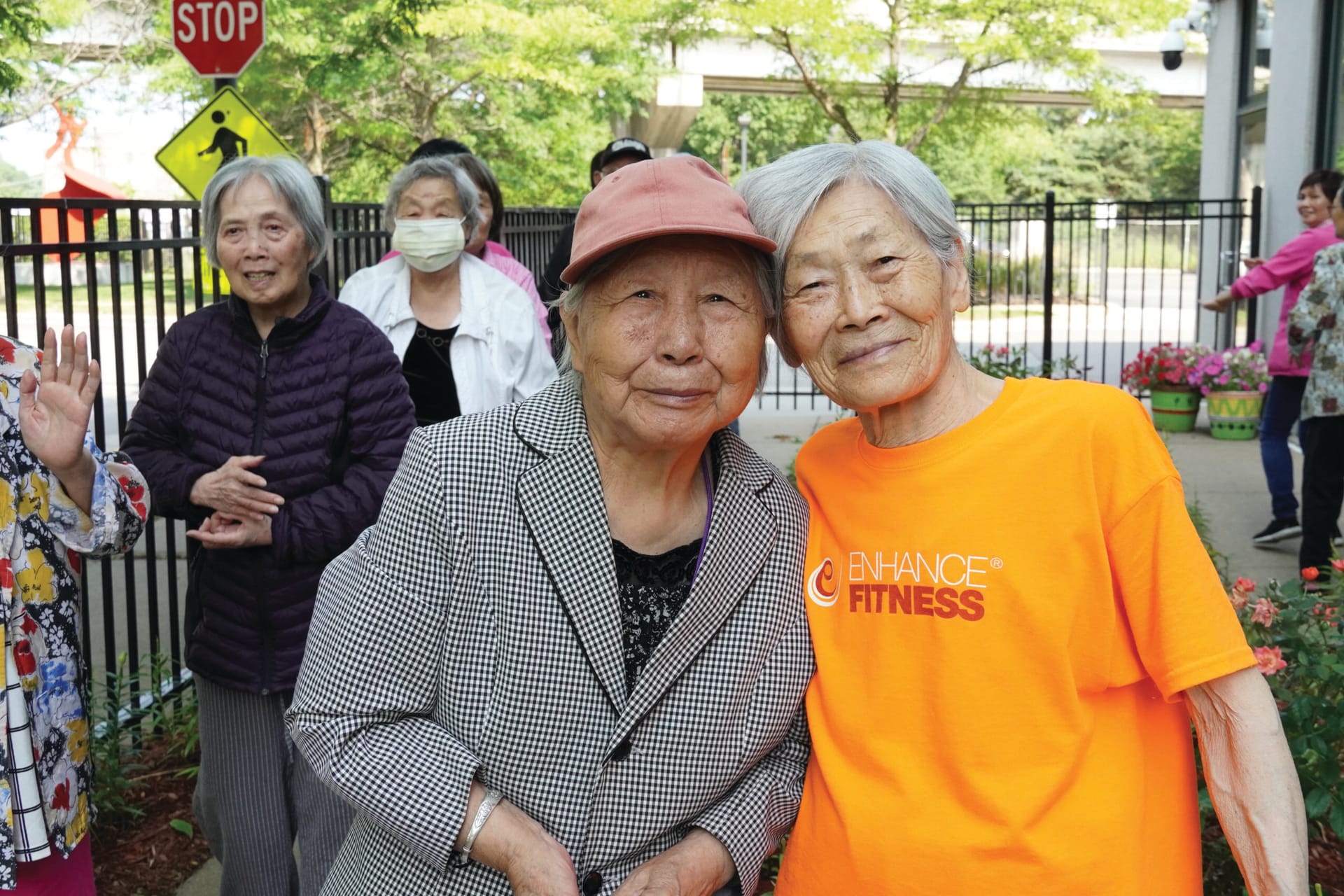
At a recent Lunar New Year celebration, a 103-year-old participant attended with her daughter.
“Successful aging for her was still being in her right mind, having her family around, and being able to access programs and socialize in her community,” Trenace shares.
Ultimately, successful aging is about self-determination, the ability to make choices, maintain independence and live with dignity at every stage of life.
At CASL, that’s what we strive to support: ensuring older adults have the resources, respect and agency to age on